
For millions of people living with limited mobility, the simple act of standing upright can become a daunting, even dangerous, task. Caregivers often bear the brunt of this challenge, risking their own health while trying to assist a loved one or patient in transferring from a chair to a bed or toilet. An electric sit to stand lift changes that equation entirely. Unlike a full-body sling lift, which hoists a completely dependent patient, this device supports individuals who have some lower-body strength but lack the stability or endurance to rise independently. The result is a transfer that respects the patient's active participation, promotes circulation, and dramatically reduces the physical toll on caregivers. This article explores the mechanics, practical applications, and real-world benefits of this indispensable tool in modern rehabilitation and daily care.
How Electric Sit to Stand Lifts Bridge the Gap Between Bed and Independence
An electric sit to stand lift operates on a simple but effective principle. The patient sits on a padded platform or specialized sling, places their feet on a stable footplate, and grips handles or a chest pad. As the lift’s motor quietly engages, the platform tilts upward, gently guiding the patient into a standing position while the caregiver steers the base toward the target chair, bed, or commode. Critically, the patient bears a portion of their own weight, which helps maintain muscle tone, bone density, and an active range of motion. This distinguishing feature makes the device ideal for individuals recovering from hip or knee surgery, those with Parkinson’s disease, or elderly users experiencing general deconditioning.
Caregiver strain is a leading cause of injury in home care and healthcare facilities. Manual transfers that require twisting, lifting, and reaching often lead to back injuries, lost workdays, and burnout. An electric sit to stand lift provides a mechanical advantage that virtually eliminates the need for heavy lifting. The battery-powered motor allows smooth, controlled movement, and many models include power steering or easy-glide casters that make maneuvering through doorways and around furniture effortless. For the patient, the psychological benefit is profound—standing, even with assistance, reinforces a sense of autonomy and normalcy. In long-term care settings, regular use of such lifts has been linked to fewer falls and improved patient morale, as individuals are not left feeling passively transported.
Furthermore, these lifts are increasingly designed with user-friendly controls. Remote pendants or handle-mounted buttons allow the patient or caregiver to initiate the lift sequence without awkward reaching. Many units also feature emergency stop functions and low-battery indicators to ensure safety at all times. The compact footprint of most electric sit to stand lifts means they fit into tight home bathrooms or bedside areas, eliminating the need to rearrange furniture. Whether used in a rehabilitation gym or a private residence, the device transforms a high-risk transfer into a predictable, dignified procedure. This technology does not merely aid movement—it restores confidence in the ability to stand again.
Real-World Impact: Case Studies in Home and Clinical Settings
Consider the case of Margaret, a 78-year-old woman recovering from a total knee replacement. Her physical therapist recommended a transitional lift for home use. Before the device arrived, Margaret’s husband, Arthur, had to support her full weight during standing attempts, which exacerbated his own chronic back pain. After implementing an electric sit to stand lift, Margaret could practice standing multiple times daily without Arthur’s physical strain. Within four weeks, her balance improved to the point where she could stand with only a walker. The lift not only accelerated her rehabilitation but preserved Arthur’s health, allowing the couple to remain at home rather than moving to assisted living. Caregiver surveys from the same case study reported a 75% reduction in perceived physical exertion after introducing a sit to stand lift.
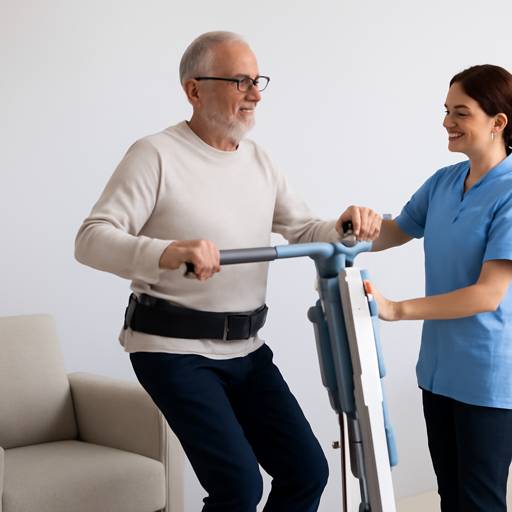
In a skilled nursing facility, staff implemented electric sit to stand lifts across a 40-bed rehabilitation wing. Previously, manual transfers required two caregivers for each patient meeting partial-weight-bearing criteria. This often led to scheduling delays and inconsistent technique. With the lifts, a single caregiver could safely manage transfers, freeing up colleagues to address other patient needs. Fall incidents among these patients dropped by 40% over six months, likely because the lift’s controlled descent eliminated the sudden shifts that often trigger loss of balance. The facility also reported a 30% decrease in staff absenteeism related to musculoskeletal injuries. This real-world example demonstrates that investing in the right equipment improves outcomes for both patients and the care team.
Another illustrative scenario involves a home hospice patient with amyotrophic lateral sclerosis (ALS). In the early stages, he retained enough leg strength to benefit from a sit to stand lift. His family noted that using the lift to get out of bed each morning preserved his ability to interact with loved ones at the dining table, rather than lying prone all day. The psychological boost was immense. Occupational therapists often emphasize that electric sit to stand lifts are not just hygiene or transfer tools—they are instruments of participation. When a patient can stand to greet their grandchildren or sit upright for a meal, quality of life improves far beyond what a bedridden existence can offer. These case studies underscore that the lift’s value extends beyond mechanics; it enhances human connection.
Key Features to Consider When Selecting an Electric Sit to Stand Lift
Choosing the right device requires attention to several technical specifications. First, weight capacity is paramount. Most electric sit to stand lifts handle between 300 and 500 pounds, but heavier-duty models exist for bariatric patients. Always verify the safe working load against the patient’s maximum weight to ensure safe operation. Second, consider the lift’s range of motion. Some models offer a higher lifting arc, which can be beneficial for transferring patients from low chairs or recliners. Others provide a lower starting position that accommodates wheelchair transfers. The footplate design also matters: non-slip surfaces, adjustable width, and heel guards prevent foot slippage and provide comfort during the standing phase.
Battery-powered lifts offer the advantage of portability, but battery life varies. Look for models with a quick-charge system that can complete a full charge in under four hours and provide enough cycles for a full day of care. A backup manual release is essential for emergencies in case of power failure. The base should be stable, with spreadable legs that provide a wide footprint during use and narrow for storage. Sling compatibility is another factor—some units use a padded hammock-style sling, while others rely on a rigid seat that slides under the patient. For the most reliable options, explore the electric sit to stand lift collection, which includes models suited for both home and clinical environments.
Ease of cleaning and maintenance should not be overlooked. Materials that can be wiped down with standard disinfectants are vital, especially in multi-user settings. Upholstery should be fluid-resistant and removable for laundering. The control pendant should be intuitive, with clearly marked up/down buttons and an emergency stop. Finally, consider the warranty and after-sales support. A lift that requires frequent repairs can disrupt care schedules and cause frustration. Manufacturers that offer on-site training, phone support, and prompt parts replacement add long-term value. By carefully evaluating these features, caregivers and facilities can select a lift that not only meets current needs but adapts as a patient’s condition evolves, ensuring that standing—that most basic of human actions—remains a safe and achievable goal.
